
Mecosta County Arrest Warrants Explained
An arrest warrant does one job: it empowers a peace officer to take a named person into custody and bring that person before a judge or magistrate. Michigan court rules and the criminal procedure statutes spell out what the paper must contain. It has to identify the accused by name or description, name the offense, and direct an authorized officer to act on it. That is the whole anatomy of the order. Mecosta County posts no public arrest-warrant list, so confirmation comes from the court that issued it rather than from any name search on an agency page. Where you file matters, too. Complaints that stay at the district level run through the district court, while felony cases reach the circuit court only after a bindover. Either way, the issuing court holds the answer.
Mecosta County Magistrate's Arrest Warrant Role
Who actually signs a Mecosta County arrest warrant? The county court directory gives a direct answer. District magistrates may set bail, accept bond, take authorized pleas, and issue arrest and search warrants when a prosecutor or a municipal attorney authorizes the complaint. At the 77th District Court, Tom Lyons serves as administrator and magistrate, and Judge Peter Jaklevic sits on the bench. Keep the limits in mind, though. That authority is case-specific, so it does not mean every warrant comes from a public counter, that any officer can request one, or that a police department can retract one. Those calls rest with the court holding the file. Note: A district magistrate may issue a Mecosta County arrest warrant when the prosecutor authorizes the complaint.
Inside a Mecosta County Arrest Warrant
A warrant packs a lot into a few fields, and a Mecosta County clerk can read the key ones aloud. Ask for the case number first. Every question that follows depends on it.
| Accused identification | A name or a description sufficient to identify the person. |
|---|---|
| Offense | The charge label with its statutory reference and classification. |
| Issuing judicial officer | The judge or magistrate who signed the order, with the issue date. |
| Complaint reference | The complaint and prosecutor authorization behind the finding of probable cause. |
| Bond or release condition | Set in the case when the court has addressed release. |
| Service and return | The agency that carried out the warrant, when that record is public. |
| Status | Active, served, recalled, or quashed, as entered on the docket. |
Mecosta County Arrest Warrant Paperwork
The paperwork follows a fixed path. A complaint gets prepared and presented through the prosecutor. A judge or magistrate then reviews it for probable cause. If the cause is there, the court picks a summons or a warrant, and the rule tilts toward a summons unless a listed circumstance, such as an assaultive allegation or a reason to doubt the person will appear, points to a warrant. From there law enforcement serves the order. After an arrest, the issuing court takes over arraignment, sets release conditions, and schedules the dates that follow. One wrinkle worth knowing: court records and law-enforcement records update on different schedules in Mecosta County, so ask the clerk which document confirms the current status.
Serving Arrest Warrants in Mecosta County
For service and custody questions, the Mecosta County Sheriff's Office sits at 225 S Stewart Street in Big Rapids and answers at (231) 592-0150. The jail line, (231) 592-0156, runs around the clock and can tell you whether someone is in custody. Big Rapids fields its own department at 435 N Michigan Avenue. The administrative number is (231) 527-0005, with a non-emergency after-hours line at (231) 796-4811. That department advertises 24-hour police service but publishes no warrant portal. Assignments between agencies are not listed case by case, so treat any guess about who serves a particular warrant as just that. Note: No page names the agency serving a given Mecosta County warrant, so ask the court which office to expect.
Comparing Arrest, Summons, and Bench Warrants
Three papers, three jobs. A summons orders an appearance, an arrest warrant orders an arrest, and a Mecosta County bench warrant answers a missed obligation.
| Document | What it does | How it usually ends |
|---|---|---|
| Summons | Orders a person to appear without authorizing an arrest | Appearance at the scheduled hearing |
| Arrest warrant | Authorizes an officer to arrest and bring the person before a judicial officer | Arrest, arraignment, and release conditions |
| Bench warrant | Responds to a missed date or an unmet court order | A recall, a new date, or an arrest |
Mecosta County Arrest Warrant Service Roles
Each office in Mecosta County plays a distinct part. The clerk explains the docket and what the court requires. The sheriff and city police carry out the order and hold custody. None can stand in for the others.
- The clerk confirms status, next court date, and any bond or motion requirement.
- The Sheriff's Office answers service and custody questions the court directs to it.
- Big Rapids police answer city agency questions and handle city records requests.
Note: An agency phone call can confirm custody, while only the issuing court can recall a warrant.
If There's an Arrest Warrant for You
Call a criminal-defense attorney before anything else. An attorney can pull the docket, explain what the charge carries, and weigh a voluntary appearance, a bond, or a motion to recall the warrant. Rule 6.105 opens a door for many people to appear at the issuing court within one year. Read the fine print, though, because the rule carries exceptions and the court sets the schedule. Do not test a warrant through a traffic stop, and never assume a payment on an unrelated fee settles things. The county overview lays out the resolution steps for Mecosta County in full.
Important: An active warrant can lead to arrest during any police contact, so arrange the appearance through counsel rather than by surprise.
Note: Talk with an attorney before a voluntary appearance in Mecosta County when the case involves a felony or a domestic allegation.
Mecosta County Search Warrants Differ
A search warrant works differently in Mecosta County. It authorizes a search, not an arrest. The supporting affidavit is also treated separately. Under MCL 780.651(8), that affidavit stays out of the public file from the day the warrant issues until day 56, unless an exception or a court order opens it sooner. The rule stops there. It does not seal every arrest-warrant docket, and it does not close a case file that is otherwise public. The investigative paperwork behind a search can be withheld while the arrest record stays open to inspection.
Mecosta County, State, or Federal Warrant
A Mecosta County warrant search stays inside the state system. The 77th District Court, the 49th Circuit Court, the Sheriff's Office, and the state case search all live there. None of them can touch a federal matter. Federal cases run through the Western District of Michigan, and Mecosta County sits in its Southern Division, oriented to Grand Rapids. The district court page lists which counties belong to each division.
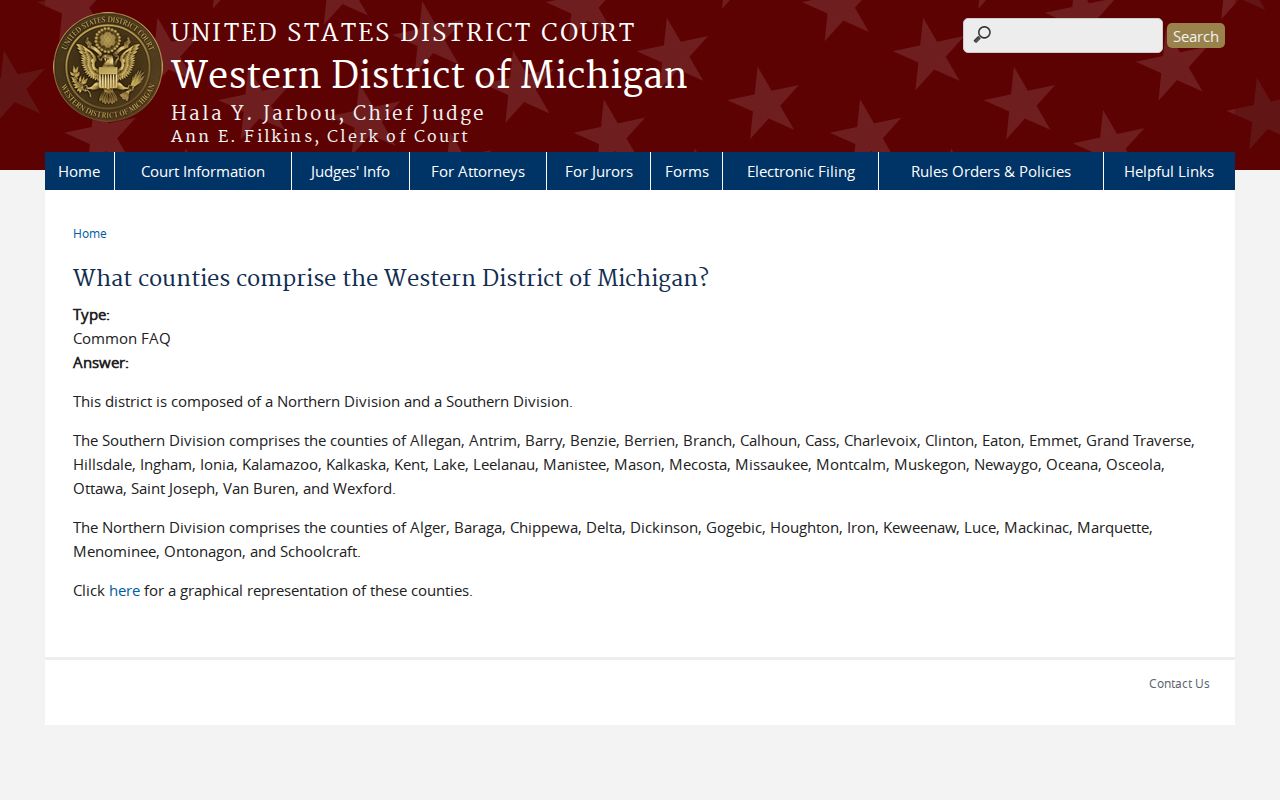
That map helps when a local warrant lookup comes up empty and a federal case seems possible. The U.S. Marshals handle that layer. The U.S. Marshals district office listing gives the Western District at 110 Michigan Street NW, Suite 744, Grand Rapids, MI 49503-2365, (616) 456-2438.

That office covers federal agencies only. It will not handle a state case out of Mecosta County. For federal dockets, PACER pricing charges $0.10 per page, capped at $3.00 per document.
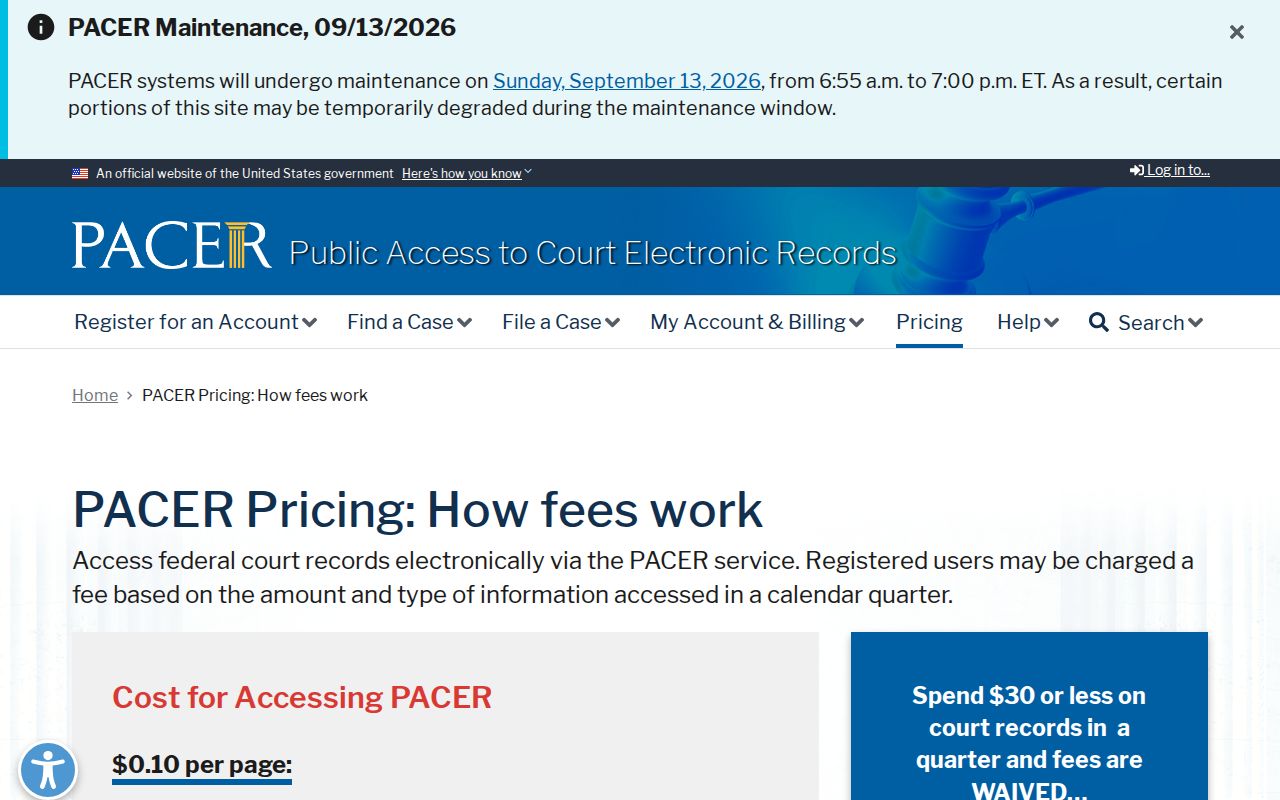
Those charges are federal docket fees only, and a sealed federal matter may not appear in Mecosta County or anywhere else on that system.
What to Record From a Mecosta Warrant Call
Write down what the Mecosta County clerk tells you. Keep the court name and county, the case number, the case type, the date of the last docket event, the status given, and where the appearance is set. Note who helped you and when you called. Skip anything a public page never showed. Addresses, birth dates, license numbers, and report numbers belong in the case file. Never pass them to a third-party site.
Note: A written instruction from the issuing court outranks any online result when the two disagree.